Thank You to the Educators Helping Shape the Next Civic Mirror
Action-Ed would like to extend a sincere thank you to the more than 30 educators who took the time to complete our Civic Mirror Educator Feedback Survey.
As we begin planning a major redevelopment of Civic Mirror, our goal is to make the program more intuitive, user-friendly, flexible, and valuable for classroom use — while preserving the powerful learning experience that has made Civic Mirror meaningful for teachers and students over the years.
The feedback we received was thoughtful, detailed, honest, and incredibly helpful. Educators shared what continues to make Civic Mirror work, where the current experience needs improvement, and how a next-generation version could better support classroom learning.
At a glance: More than 30 educators submitted feedback to help guide the next version of Civic Mirror. Five educators were selected to receive one printed Instructor Manual and five printed Student Manuals for classroom use.
Congratulations to Our Educator Feedback Prize Winners
As a thank-you for participating, educators were entered into a prize draw for one printed Civic Mirror Instructor Manual and five printed Student Manuals to keep on hand for classroom use.
Congratulations to this year’s educator feedback prize winners! We are grateful for their contributions, and for the many years of experience represented by the educators who responded.
About This Year’s Winners
 |
Lee Ryan Miller Lee Ryan Miller is a longtime Civic Mirror user and Political Science professor at College of San Mateo. His feedback captured one of Civic Mirror’s core strengths especially well: in political science, students do not usually get a “lab” the way they might in science — Civic Mirror gives them a way to learn politics, government, and economics by doing. |
 |
Cathy Johnson Cathy Johnson teaches 8th Grade Social Studies at Hastings Middle School. In her feedback, she described Civic Mirror as a highlight of the 8th-grade year, giving students an authentic civics experience where they take ownership of learning about government, politics, economics, leadership, and collaboration. |
 |
Paul Chaffee Paul Chaffee teaches in School District 43 in Coquitlam and has been using Civic Mirror for nearly 20 years. His feedback emphasized how the simulation gives students agency and ownership, especially through the political system, hidden agendas, and economic decision-making built into the experience. |
 |
Genevieve Tannas Genevieve Tannas is a teacher-consultant with Edmonton Public Schools and brought the perspective of a French-Immersion educator working with Alberta’s curriculum. She shared how Civic Mirror helps students experience Canadian governance and economics in a highly interactive way, while also identifying translation and electoral-system improvements that could strengthen future versions. |
 |
Tanya Lacey Tanya Lacey teaches with Grand Erie District School Board and brings the perspective of a secondary Civics educator. Her feedback emphasized Civic Mirror’s value as a hands-on way to learn Civics that engages nearly every student, while also suggesting more teacher control over government settings such as tax rates, national symbols, and other in-game decisions. |
What We Heard from Educators
Across the feedback, one message came through clearly: educators continue to see tremendous value in Civic Mirror’s core learning experience.
The big takeaway: educators are not asking for Civic Mirror to become something entirely different. They want the proven in-class simulation preserved — while the website, teacher tools, setup process, and supporting systems are modernized and strengthened.
The strongest recurring feedback clustered around six major themes:
1. Preserve the experiential heart of Civic Mirror
Educators continue to value the way Civic Mirror turns abstract civics and economics concepts into lived classroom experiences. Student agency, collaboration, leadership, political participation, economic decision-making, and authentic classroom interaction remain central to the program’s value.
2. Modernize the website and user experience
Teachers repeatedly pointed to the need for a cleaner, more intuitive online platform. They want clearer navigation, simpler dashboards, fewer menus, updated visuals, and a student experience that feels easier to understand and use.
3. Make Civic Mirror easier to launch and manage
Educators asked for clearer onboarding, shorter instructions, better tutorials, editable templates, sample scripts, and resources that reduce the amount of repeated explanation required to get students started.
4. Give teachers greater control and visibility
Feedback included requests for better participation data, message and chat records, moderation tools, activity reports, annual summaries, and the ability to correct or reverse accidental actions.
5. Improve the economic and trading systems
Teachers identified opportunities to simplify transactions, prevent accidental trades, create more jobs and income opportunities, add resources, and explore concepts such as banking, investment, inflation, and more advanced economic roles.
6. Create opportunities for countries to interact
International trade, diplomacy, alliances, globalization, and interaction between different Civic Mirror classes were among the most exciting suggestions for future development.
Other priorities educators raised:
| • Greater flexibility | • Updated game mechanics |
| • Improved accessibility and integrations | • New simulation-based learning programs |
How This Feedback Will Guide the Rebuild
The Civic Mirror redevelopment will be guided by a simple principle: preserve what makes the simulation powerful, and rebuild the systems that make it easier to run, manage, adapt, and expand.
That means the classroom experience will remain the foundation. Students will still learn by participating in a simulated country, making decisions, taking on roles, negotiating with one another, experiencing consequences, and reflecting on what happened.
Our next steps: use educator feedback to guide decisions about interface design, onboarding, teacher controls, reporting, pacing, digital tools, economic mechanics, and future simulation possibilities.
We know Civic Mirror has worked best when teachers bring it to life with their own creativity, classroom management, and professional judgment. The next version should support that work more effectively — not get in the way of it.
Thank you again to every educator who contributed feedback. Your ideas are helping shape the next generation of Civic Mirror, and we are excited to continue building from the experience, creativity, and insight of the teachers who have brought the program to life in classrooms.
Stay involved: We’ll continue sharing updates as the Civic Mirror redevelopment process moves forward, and we look forward to inviting more educator input along the way.
 Written by:Evan Arseneau
 Written by: Noah Hall
 The next proposal was the law of Anti-Corruption, which would prevent the following: abuse of power within government and forcible seizing of land (with the exception of debt, which the government will then take and sell). This was passed with full approval of the house.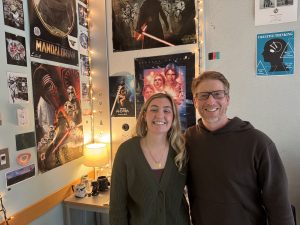

 Also during the election, tenisons were high. I, myself, was having a pounding heart. Questions flew and people voted. The leader of White House Down got into an argument with a MP runner from Ratatata, and a another MP Runner from Ratatata was told that if he laid hands on someone, he’ll be kicked out. The leader of White House Down seemed to be very calm and joked around whilst the counting was going on, The leader of Ratatata was also calm. Leader of La Gousteau was very tense.
 Written by: Eli
 We start off at the election. The candidates for president are Quinn, Enzo, Brayden, and Eamon, the senate candidates are Ian, Eli, Caleb, and Josh, and the candidates for the House are Andrew, Michael M, Tyler, Seamus, Teddy, Grayson, and Raymond. In the Senate, Ian, Eli, and Caleb get elected with Eli as the Senate President. Andrew, Tyler, Raymond, Seamus, and Michael M get elected to the House, Michael M being the speaker. However, the race for President is a tie between Enzo and Quinn, so there has to be a coin flip to decide the winner. Quinn wins, and becomes the president, concluding the first election.
 At the end of the year, all units have been consumed except one extra food for Michael M, and everyone has a powered place to live except Teddy. The final country score is a 6.2 / 10, which ranks 19th in Civic Mirror World, and a couple bad wild cards result in 3 citizens having family deaths. At the end of everything, Raymond has the most WB points with 50, and Eli, Enzo, and Tyler are tied for the most SPs with 15.

 The international community is also increasingly concerned about the situation in 9H22, with some calling for the government to take urgent action to address the economic crisis. However, there is no easy solution to the country’s problems, and it is likely to take significant time and effort to stabilize the economy and bring inflation under control.
 The Vote Zoe Dummies Party has prevailed in a close election in DustinVille, taking 4 seats and control of the government. VZDT candidate Colby Zelt took a landslide victory with 48 points. A crushed Democratic Party of Dustinville will now be forced to elect a new leader, as current leader Dominik Vrbanek was ousted in his seat by the VZDT’s Anthony Shibata. VZDT leader Zoe Reid has taken her seat and won the position of Prime Minister of DustinVille for the 2000 election, promising to stabilize our energy and food crises while keeping taxes at an affordable rate. Can her party save us from an impending energy emergency?
 Written by: Mike He